Most cosmetic practices we work with underspend on marketing. Not because they're cautious, but because they're reasoning from the wrong number.
When a clinician calculates "what am I willing to pay to bring in one veneer patient," the number that usually anchors the answer is the case fee. $40,000 case, ~$28,000 gross margin, so maybe $800 to acquire feels reasonable, $2,000 feels aggressive, $3,000 feels crazy.
The case fee is the wrong number. The right number is the patient's lifetime value, and it's roughly three times larger.
A $40,000 veneer patient generates approximately $28,000 in gross margin on the first case, another $35,000 to $50,000 in follow-on procedures over the next 8 to 10 years, and drives an average of 1.4 successful referral cases at similar case values. Total lifetime value: roughly $110,000 to $135,000 in margin. Marketing spend of $1,200 to $2,400 per booked patient is well within the range that a well-run practice should comfortably support.
The three layers of value
Every cosmetic patient generates value across three time horizons. Practices that only price the first horizon underestimate their patient value by two-thirds. Here they are in order.
Layer 1 — The initial case ($28,000 in margin)
A $40,000 full-arch porcelain veneer case runs approximately $12,000 in lab, chair-time, materials, and support costs at a well-run cosmetic practice. That's $28,000 in gross contribution, arriving within 6 to 10 weeks of the initial consult.
If your practice stops calculating patient value here, you are leaving 65% of the true number on the table.
Layer 2 — Retention and follow-on ($35K–$50K in margin over 10 years)
Cosmetic patients are exceptionally loyal — their aesthetic outcome is a personal investment they want protected. Over the next 8 to 10 years, a typical veneer patient at a full-service cosmetic practice will complete:
- 2–4 rounds of at-home whitening and single-tooth refresh work ($2K–$4K in margin)
- 1 replacement or refresh of veneers (typically at year 10–15, ~$18K in margin)
- Additional aesthetic procedures — bonding touch-ups, Invisalign, occasional crown work ($6K–$18K in margin)
- Family members brought in for the same clinician ($8K–$14K in margin from partners and adult children combined)
The retention layer is where practices that treat cosmetic patients as one-time transactions dramatically underperform practices that build a long-arc relationship. The difference shows up in year 4, not year 1.
Layer 3 — Referrals (1.4 comparable cases per patient)
The referral behavior of cosmetic patients is what makes them economically special. General dental patients refer at roughly 0.3–0.5 new patients over their lifetime. Cosmetic patients refer at 2–3x that rate — because their result is visible every time they smile, they tell people about it, and the people they tell (spouses, close friends, colleagues) share their income profile.
Averaged across our client base, a happy full-arch veneer patient refers 1.4 booked comparable cases over the following five years. At a $28K margin per referred case, that's another $39,000 in contribution — with essentially zero marketing cost against it.
The patient in your chair right now is worth more than the patient you'll acquire next. That's an argument for spending on both.
Adding it up
| Layer | Contribution margin | Time horizon |
|---|---|---|
| Initial case | $28,000 | 6–10 weeks |
| Retention & follow-on | $35,000–$50,000 | 8–10 years |
| Referrals (1.4 cases) | $39,000 | 1–5 years |
| Total lifetime value | $102,000–$117,000 | 10 years |
Anchor on the total, not on the first case. Every marketing decision — spend, channel, offer, targeting — should be sized against that number.
The break-even on marketing spend
If a booked veneer patient is worth $110,000 in lifetime margin, the break-even cost of acquisition — before you lose money — is well over $100,000 per patient. Obviously no one is spending that. But the practical implication is that if a channel or agency is delivering booked cosmetic consults at $800 to $2,000 each, you are dramatically under-invested in it and should increase spend until the marginal cost per case exceeds your target ROAS threshold.
We see practices treat $1,500-a-patient acquisition costs as "too expensive." It is, on average, the single best-priced patient acquisition in all of American healthcare.
Where the $40K patients actually come from
Not all channels are equally likely to deliver a $40,000-case patient. Here's the breakdown across our cosmetic client base, averaged over 2025–2026.
| Channel | Avg case value | Cost per booked case | Notes |
|---|---|---|---|
| AI Search (ChatGPT, Perplexity, Gemini) | $32,000–$54,000 | $700–$1,200 | Highest-intent traffic; patient has already qualified you |
| SEO / Google organic | $22,000–$38,000 | $900–$1,600 | Steady base-load; requires 6–9 months to ramp |
| Google Ads (paid search) | $18,000–$32,000 | $1,500–$3,200 | Fast on/off; skews toward price-sensitive segment |
| Meta ads (Facebook/Instagram) | $16,000–$26,000 | $400–$900 (leads) | Higher volume, lower intent; needs strong qualification |
| Referrals (organic) | $28,000–$52,000 | ~$0 | Highest converting; capacity-limited |
Two things stand out. First: AI Search delivers the highest average case value of any acquired channel, because the patients who use AI search to find a cosmetic dentist are disproportionately researching bigger cases. Second: Meta delivers volume but at half the case value — useful, but not the growth lever for premium practices.
See what AI Search is doing for your practice today
Enter your URL and get a full breakdown of your AI Visibility across ChatGPT, Gemini, and Perplexity — the channel with the highest average case value on this list.
Run the Free AI Visibility AuditFrequently asked questions
What is a reasonable cost of patient acquisition for a veneer case?
Across our cosmetic dental client base, blended cost per booked new-veneer patient runs $600 to $1,400 depending on market and channel mix. Against a $40,000 case with $28,000 in gross margin, that puts payback under one case and marketing ROAS at ~20-45x on the first case alone — before follow-on procedures and referrals.
How do I calculate lifetime value for a cosmetic dental patient?
Add three numbers: (1) the initial case value; (2) expected follow-on procedures over 8-10 years (retention treatments, additional aesthetic work, whitening cycles, occasional emergencies); (3) the value of referrals — cosmetic patients refer at 2-3x the rate of general dental patients because their outcome is visible. A premium veneer patient's true LTV usually lands between $95K and $135K when all three are included.
Should I lower my case fees to attract more patients?
Almost never. A 10% price cut requires you to acquire 12-15% more patients just to break even on gross margin, and it materially damages your position with the segment you actually want. Premium cosmetic patients select on trust, credentials, and outcome — not price. Practices that lead with price signal to the wrong audience.
What does a healthy marketing spend look like for a cosmetic practice?
Cosmetic-focused practices typically spend 4-8% of gross revenue on marketing, versus 2-3% for general dental. The higher spend is justified because each incremental case is worth 15-25x more than a general-dental patient. Below 4% and you are almost certainly under-investing; above 10% and the marketing team is probably not efficient.
Is $40,000 a realistic veneer case?
Yes — the $40K figure represents a full-arch (typically 8-10 units) porcelain veneer case in a metropolitan market with an established AACD-level clinician. Cases range from $18,000 for a 6-unit smile to $65,000+ for combined smile-makeover work involving multiple modalities. The math in this article uses $40K as a mid-range anchor.
How long until a marketing investment pays back?
For cosmetic dental with premium case values, marketing spend usually pays back within the first booked case per patient — so payback is measured in weeks, not months. What takes longer is building a repeatable pipeline. New AI Search Optimization work generally starts producing citable results at 6-12 weeks and consistent inbound flow by month four.
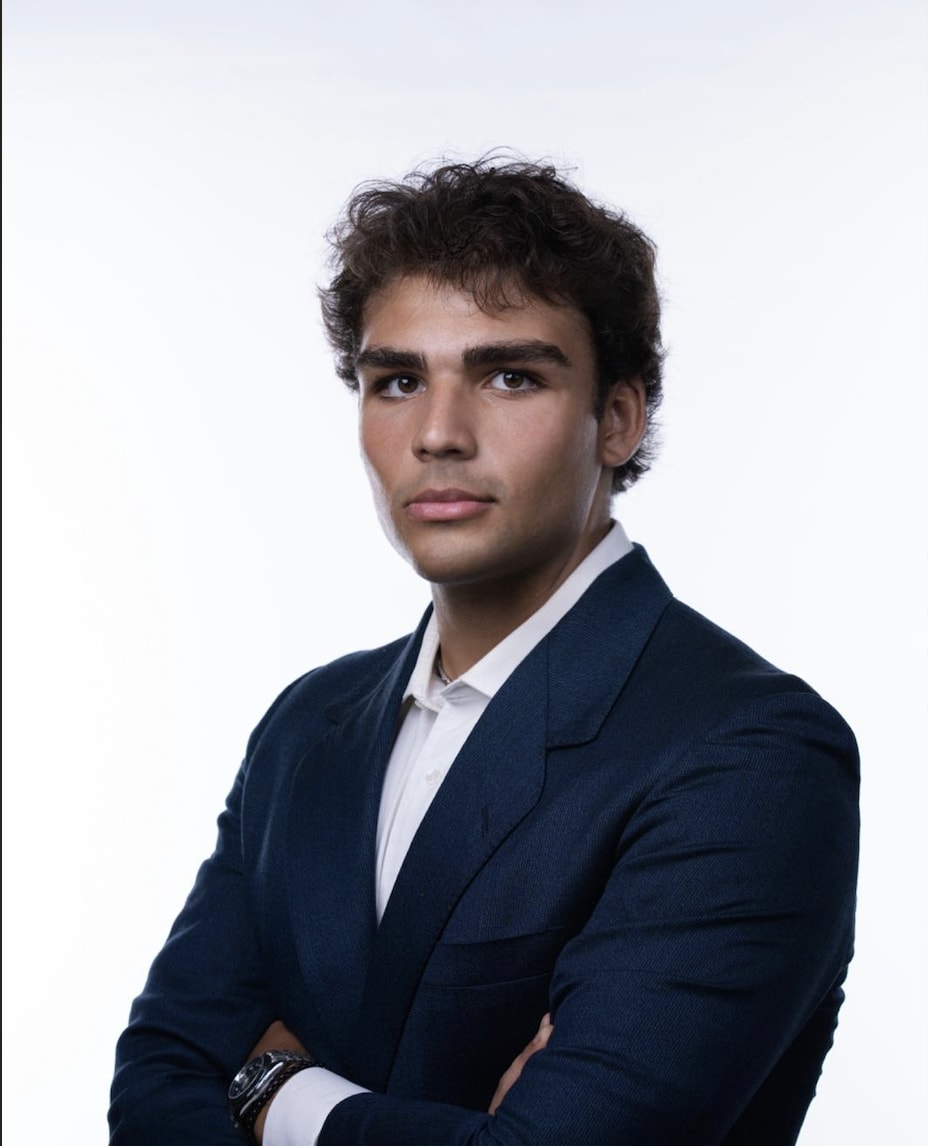
Fouad co-founded Beacon Studio and writes on the business side of running a premium practice — pricing, unit economics, and how growth marketing pays back for cosmetic-focused clinicians.
Connect on LinkedIn