A woman in Manhattan opens ChatGPT on her phone. She has been thinking about veneers for eighteen months. She types: "Who is the best cosmetic dentist in New York for veneers?"
ChatGPT names three practices. She saves them. She books consults with two of them the following week. One of those two — the one whose smile-design gallery convinced her over the second cup of coffee — books her for a $32,000 veneer case.
Was your practice on that list of three?
ChatGPT recommends dentists based on four signals: structured schema on your own website, third-party mentions (news, directories, reviews), semantic authority around specific procedures and credentials, and the presence of direct-answer content that lifts cleanly into a generated response. Practices that win on all four get named. Practices weak on any one of them usually don't.
What "AI Search" actually is
Google returns a ranked list of ten blue links. The patient clicks one. If your practice is number seven, you get maybe 3% of the traffic that lands on number one.
ChatGPT, Gemini, and Perplexity do something categorically different. They return one answer — a paragraph or a list of two-to-five named practices. Everything else in the world of cosmetic dentistry, from the patient's point of view, does not exist. The winner takes all.
In 2026, an estimated 34% of high-intent cosmetic-dentistry searches now start on an AI chat interface instead of Google. Among patients under 45 with household income above $250,000 — your primary veneer buyer — the number is closer to 51%. Being absent from those answers is no longer a small gap. It is a growing majority of the top of your funnel.
If ChatGPT names three practices, being the fourth-best in a city is functionally the same as being the four-hundredth.
The four signals that decide
We have reverse-engineered how ChatGPT and Perplexity make these recommendations across dozens of real veneer, implant, and full-mouth-reconstruction queries in major U.S. metros. Four signals do almost all the work.
1. Structured schema on your own website
Schema.org markup is the machine-readable metadata layer that tells an AI engine what a page actually is. On a cosmetic dental site, the schema types that matter are Dentist, MedicalBusiness, and per-procedure Service entries with areaServed and pricing signals. A page that says "we do veneers" without schema is a paragraph. A page that says the same thing inside a Service block referencing a Dentist entity is a structured claim that AI engines can attach to a named recommendation.
Roughly 78% of cosmetic dental sites we audit have no schema.
2. Third-party mentions from trusted sources
Anything you say about yourself, AI engines discount. Anything a third party says about you, they weight heavily. That includes the AACD directory, KOIS Center listings, media features (New York Magazine, Vogue, local business journals), Realself and patient-forum threads, and press releases that get picked up by local-news syndication. A single mention in a trusted publication often outweighs a hundred practice-owned pages.
3. Semantic authority around specific procedures
A site that mentions "veneers" ten times reads to an AI engine as loosely-connected to veneers. A site with a dedicated veneer page, a veneer case-study page, a veneer FAQ page, a veneer-vs-bonding comparison page, and a veneer "what to expect" page — all linking to each other — reads as an entity with deep authority on veneers. The second site wins the citation, even if the first site has a slightly better home page.
4. Direct-answer content that lifts cleanly
AI engines quote content. That means the content has to be quotable. A paragraph that starts "When patients ask us how long porcelain veneers last, we tell them ten to fifteen years with proper care" is a lift. A paragraph that starts "Porcelain veneers, which are thin custom-crafted shells that…" buries the answer. The first paragraph gets cited. The second doesn't.
How to score your practice on the four signals
| Signal | Ask yourself | Time to fix |
|---|---|---|
| Schema | Does your site have Dentist + Service schema for each procedure page? | 1–2 weeks |
| Third-party mentions | Are you listed in AACD, KOIS, RealSelf, and 3+ trusted directories? | 2–8 weeks |
| Semantic authority | Do you have 4+ pages of depth per major procedure? | 4–6 weeks |
| Direct-answer content | Do your procedure pages answer common patient questions in extractable form? | 2–4 weeks |
If you scored a clean four out of four, you are probably already being cited. Almost no one is. Most cosmetic practices land at one or two, and it's always the same two.
Why traditional SEO won't get you there
Everything a traditional SEO agency does — keyword research, backlink outreach, technical audits, GMB optimization — is designed for one thing: moving your practice up a ranked list of links. That's still worth doing. Google isn't going anywhere. But the ranked list itself is shrinking.
Google's own AI Overviews now sit above the traditional results on ~29% of health-related queries as of mid-2026. Below the Overview, the first traditional result gets 47% less traffic than it did in 2023. The top of the SERP is quietly becoming just another AI answer.
AI Search Optimization — the discipline built specifically to become the answer, not the link — is where the growth has been. It's what we do at Beacon.
What to do this week
- Search your own practice by name in ChatGPT and Perplexity — see what each engine says, and what it cites.
- Search a category query — e.g., "best veneers dentist in [your city]" — and note which three practices are named.
- Pull up one of those competitor sites and view the page source. Search for the word "schema". That's the foundation you're missing.
- Run your homepage through the Beacon AI Visibility Audit for a scored breakdown across all four signals.
- Pick the single lowest-scoring signal and give it the next four weeks of attention.
See how your practice scores
Enter your URL. In under a minute, get a scored breakdown of your AI Visibility across ChatGPT, Gemini, Perplexity, and Google AI Overviews, plus the top five fixes we'd prioritize.
Run the Free AI Visibility AuditFrequently asked questions
How does ChatGPT decide which cosmetic dentists to recommend?
ChatGPT combines four signals: structured schema on the practice's own website (Dentist, MedicalBusiness, and Service schema), independent third-party mentions (news, professional directories, review platforms), semantic authority (how consistently the site talks about specific procedures, techniques, and credentials), and direct-answer content (pages that answer patient questions in extractable form). Practices strong on all four are the ones ChatGPT names.
Does ChatGPT use Google search results to answer?
Partly. ChatGPT's browsing tool draws from Bing search results in real time when a query needs current information, and its base model has been trained on a large corpus that includes many web pages. But it also weighs source authority in ways search engines do not — a single citation in a trusted medical publication can outweigh dozens of thin review-site pages.
Is being cited by ChatGPT the same as ranking on Google?
No. Traditional SEO optimizes for a ranked list of blue links. AI Search Optimization (AEO) optimizes for a single generated answer that names one to three practices. The signals overlap — quality content and technical health matter for both — but AI engines weigh structured data, entity clarity, and third-party authority far more heavily than Google's ranking algorithm does.
How long does it take to become citable by ChatGPT?
Foundational technical fixes — schema, entity signals, and content restructuring — take about 4 to 6 weeks to implement. Actual citation behavior typically starts appearing 6 to 12 weeks after implementation, as the crawlers behind ChatGPT and Perplexity re-index the site and third-party mentions accumulate. Practices with existing authority (AACD accreditation, published papers, notable media features) see results faster.
Which AI engines matter most for cosmetic dental practices?
ChatGPT drives the most volume today (~350M weekly active users as of 2026), but Perplexity is over-represented among high-net-worth cosmetic-patient searches because it cites sources by default. Gemini's integration into Google's AI Overviews means it also captures traffic from patients who search on Google without leaving to a chat interface. We optimize for all three because the underlying signals are largely shared.
Can I do this myself or do I need an agency?
The technical audit is something a savvy practice can run on itself — the Beacon AI Visibility Audit is free for that reason. The implementation, however, requires schema engineering, content restructuring, and third-party authority-building that most practices don't have in-house. Teams with a dedicated marketing lead can do it. Most practices delegate it.
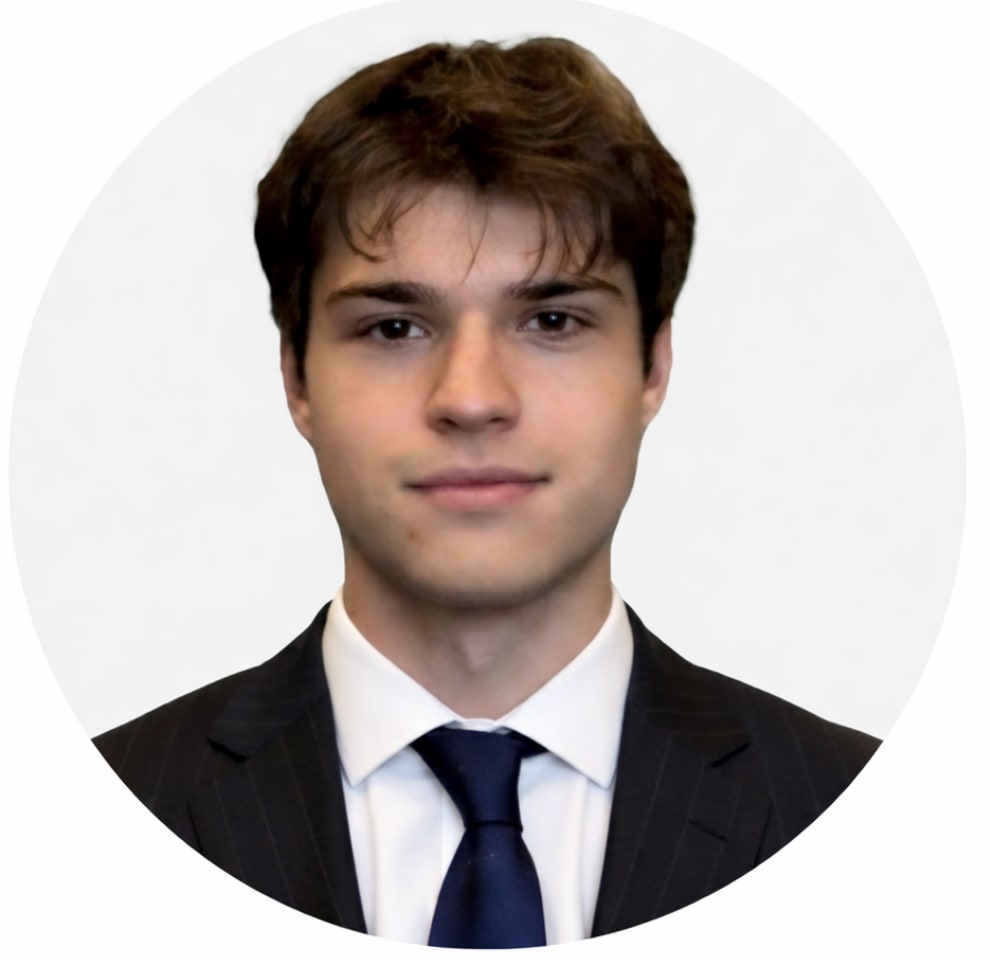
Andre is Beacon Studio's technical co-founder. He leads the studio's AI Search Optimization work — the schema, structured content, and authority signals that get cosmetic dental practices cited by ChatGPT, Gemini, and Perplexity.
Connect on LinkedIn